

Table of Contents
In the early 1960s, Goodyear introduced one of the strangest and most captivating ideas in tire history: illuminated tires that glowed from within. Dismissed for decades as a quirky footnote — even landing on “dumbest inventions” lists — the concept has resurfaced in a surprising way, proving that some ideas really do get a second chance.
How Goodyear Built a Glowing Tire
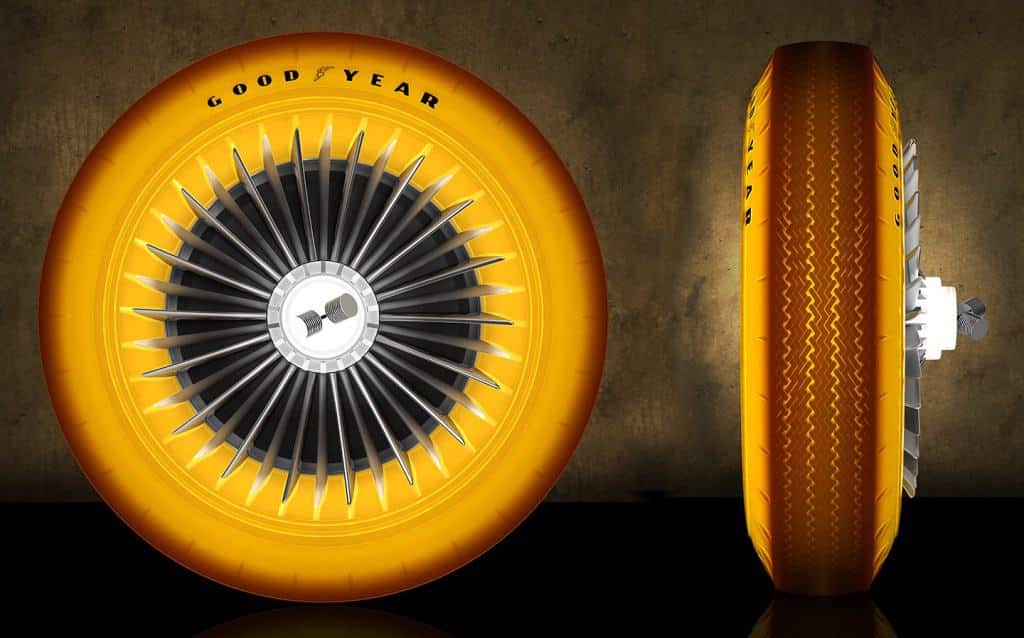
Illuminated tires weren’t made of standard rubber. Goodyear engineers William Larson and Anthony Finelli developed Neothane, a translucent synthetic polyurethane that could be poured into molds and baked, unlike traditional tires built from multiple layers of rubber and fabric. Because Neothane was translucent, Goodyear could dye it in different colors — red, yellow, green, orange, and blue — and mount 18 small light bulbs inside the rim to make the tire glow at night.
The Golden Sahara II: Illuminated Tires’ Most Famous Showcase
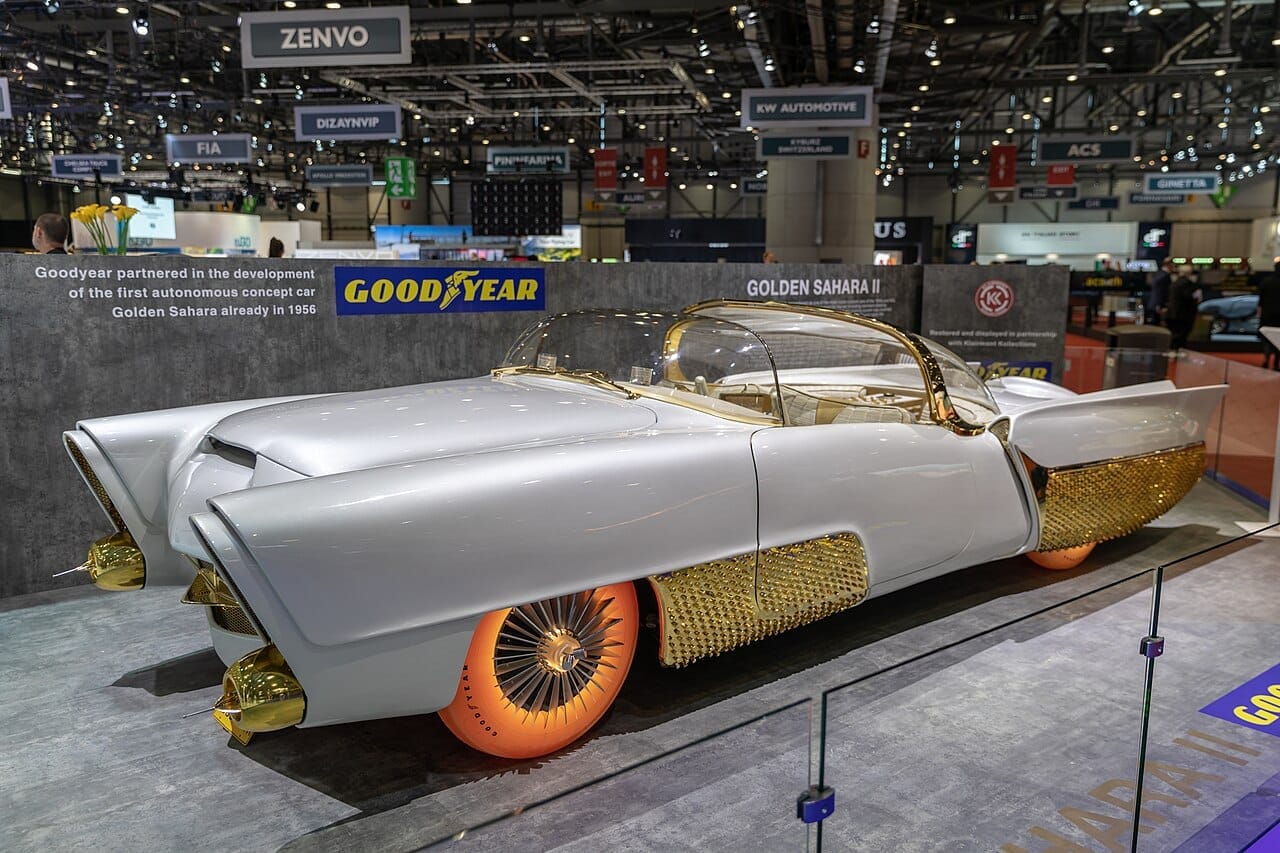
The clearest demonstration of the technology was the Golden Sahara II, a wild custom concept car built by Jim Street and legendary customizer George Barris in the early 1960s. Loaded with futuristic features — an aircraft-style control yoke, remote-control operation, and automatic braking — the car’s glowing orange tires became its signature feature, helping it earn a reputation as the “Car of the Future” in period television appearances and magazines.
Goodyear also test-drove illuminated tires on more ordinary cars, fitting a Dodge Polara and a Chrysler 300 with glowing rubber for public demonstrations in Miami and New York City.
Why Illuminated Tires Never Made It to Production
Despite the buzz, illuminated tires had serious practical problems. Neothane didn’t grip the road as well as conventional rubber, especially in wet conditions, and the tires performed poorly under heavy braking. Some accounts note the tires could weigh significantly more than standard tires, adding another mark against everyday use. After roughly a decade of development, Goodyear shelved the project entirely.
A Careful Restoration Brought Them Back
The Golden Sahara II itself disappeared from public view for decades after Jim Street’s death. In 2018, Klairmont Kollections acquired the car and commissioned a full restoration, with Goodyear stepping in to recreate a set of the original translucent tires. The restored car debuted at the 2019 Geneva International Motor Show, glowing tires and all — proving the original technology, while impractical, still had the power to captivate a crowd nearly 60 years later.
Illuminated Tires Actually Made a Comeback in 2024
The old question of “will illuminated tires ever come back?” finally got an answer. At the 2024 SEMA Show, Goodyear brought the illuminated tire concept back into the spotlight, showcasing the decades-old idea to a new generation of car enthusiasts. While still very much a novelty rather than a production-ready technology, the reappearance sparked fresh excitement across the custom car world — exactly the kind of “tuner crowd” attention the concept always seemed destined for.
Modern LED technology has also inspired a wave of aftermarket illuminated tire and wheel-lighting products, offering some of the same visual flair — though using external LED strips rather than reviving Goodyear’s original translucent Neothane approach.
Why Illuminated Tires Still Fascinate Car Enthusiasts
More than 60 years after their debut, illuminated tires remain one of the automotive world’s great “ahead of its time” ideas. They never solved the practical problems that kept them off public roads, but their appeal was never really about practicality — it was about spectacle, individuality, and imagining what a car could look like once form was allowed to lead over function.
For more stories on the classic cars and concepts that pushed automotive design forward, check out our deep dive into the Alfa Romeo 33 Stradale, another beautifully impractical piece of automotive history.
Full technical background on the car most associated with this technology is available on Wikipedia’s Golden Sahara II page.