
Table of Contents
Before the BMW 3 Series became one of the best-selling luxury cars in the world, it started as a humble two-door sedan called the E21. Produced from 1975 to 1983, the E21 wasn’t just BMW’s first attempt at the 3 Series — its motorsport career turned it into a legend, earning nicknames like “The Flying Brick” for a reason that still makes racing fans smile.
The BMW E21: BMW’s First 3 Series
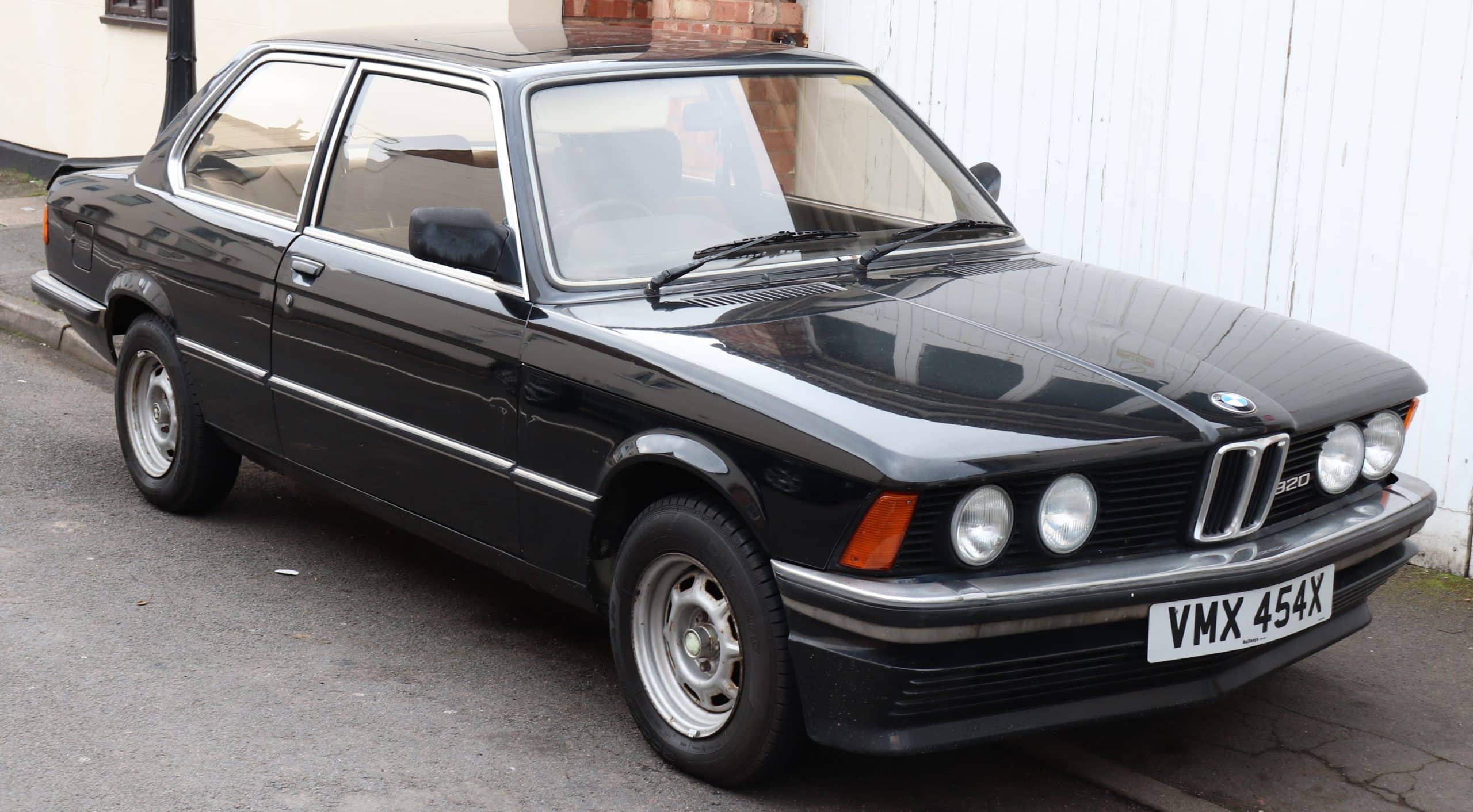
The E21 launched at the Munich Olympic Stadium in July 1975, replacing the BMW 02 Series. Designed by Paul Bracq, it was offered exclusively as a two-door sedan or coupé, with a Baur-built convertible version available separately. Early models ran carbureted four-cylinder engines ranging from 1.6 to 2.0 liters, while later six-cylinder versions were instantly recognizable by their quad round headlights instead of the base model’s two.
Production ran for eight years, with over 1.3 million units built across the E21’s lifespan, before the nameplate handed off to its more famous successor, the E30.
The “Shark Nose” and a Design That Still Holds Up
Enthusiasts often point to the E21’s front end — nicknamed the “shark nose” for its distinctive sloped grille — as one of its most recognizable design traits. It remains the only 3 Series generation to wear that particular look, which is part of why the E21 still draws a dedicated collector following today, decades after production ended.
Group 5 Racing: How the E21 Became “The Flying Brick”
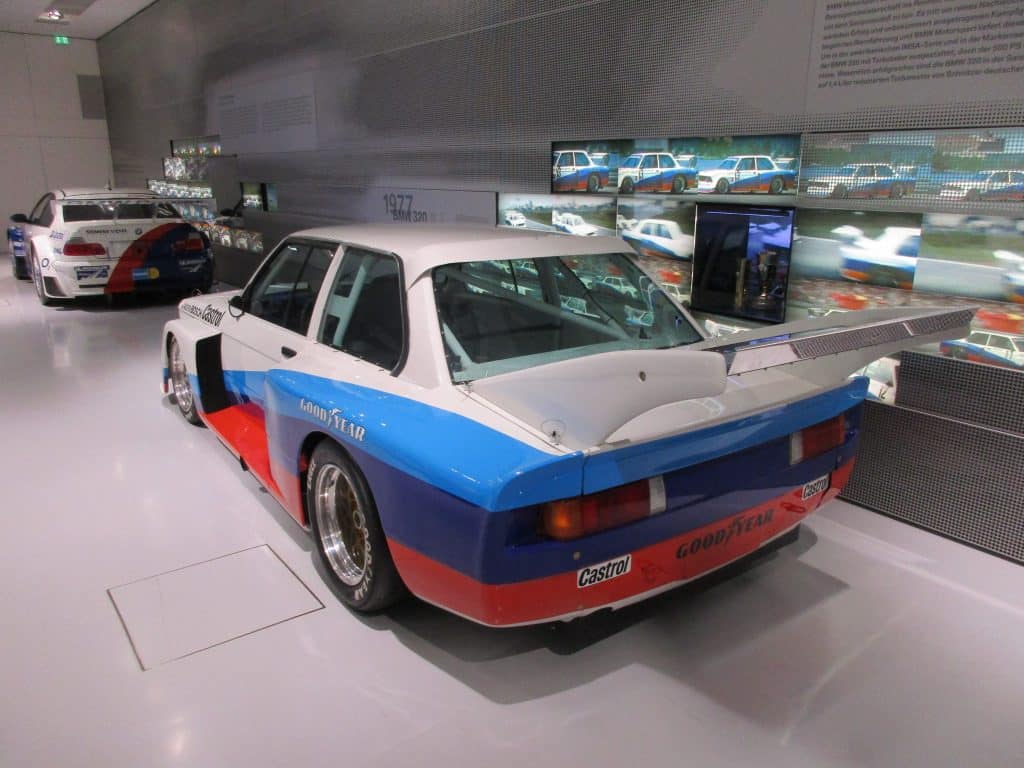
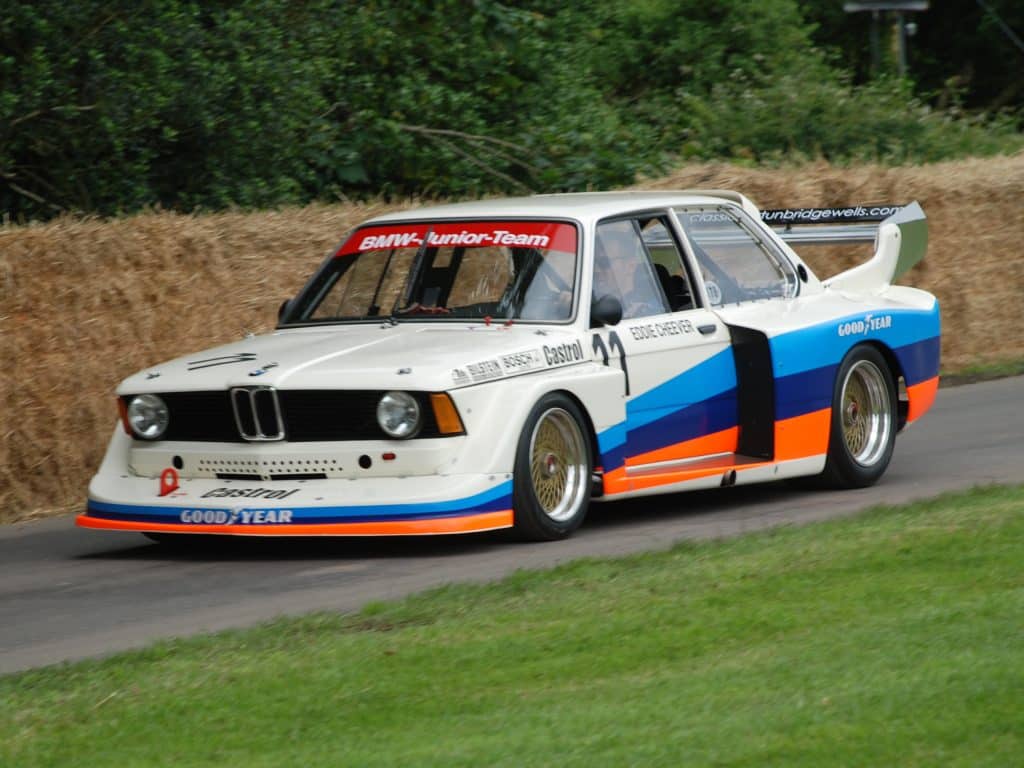
The E21’s real legend was built on the racetrack. In 1977, BMW Motorsport GmbH entered the 320i in Group 5 touring car racing as part of its newly formed BMW Junior Team, fielding future stars like Hans-Joachim Stuck and Formula 1 driver Ronnie Peterson in the now-iconic orange Jägermeister livery. The Junior Team drivers raced aggressively enough to earn a reputation — and a nickname for the boxy little BMW that stuck for decades.
Under the hood, the Group 5 320 Turbo packed a 2.0-liter turbocharged four-cylinder engine derived from BMW’s Formula 2 program, eventually producing as much as 500 horsepower in later specification — an enormous number for a car that started life as a modest compact sedan.
From Germany to America: The Group 5 320 Turbo Goes Global
The E21 Group 5 cars didn’t stay confined to Europe. BMW Motorsport sent examples to the United States, where Jim Busby Racing campaigned the cars in IMSA competition through the late 1970s, going head-to-head with the McLaren-BMW effort backed by BMW North America. One surviving Group 5 chassis later found its way to Australia, where it raced successfully in JPS livery under driver Jim Richards — a livery scheme that remains one of the most recognizable paint jobs in E21 racing history.
The BMW E21 as a Collector Car Today
While the E21 never reached the six and seven-figure valuations of some of its BMW Motorsport contemporaries, it has earned a steady and growing following among classic BMW collectors. Group 5 E21 race cars in particular are prized for their motorsport pedigree, occasionally surfacing at historic racing events and vintage auctions. Some original Group 5 chassis are still campaigned today in European hill climb events, giving spectators a chance to hear the turbocharged four-cylinder engine at full song decades after it first left the factory.
For collectors looking at standard road-going E21s, well-preserved 323i models — the range-topping six-cylinder variant — tend to command the strongest interest, prized for their combination of the E21’s classic looks and genuinely engaging performance for the era.
Why the BMW E21 Still Matters
The E21 rarely gets the spotlight that later 3 Series generations enjoy, but its influence is hard to overstate. It set the template — a compact, rear-wheel-drive sport sedan — that BMW would refine for the next five decades. And on the racetrack, it proved that a small, boxy sedan could hang with far more exotic machinery, a lesson BMW Motorsport carried forward into everything that followed.
Enjoyed this dive into BMW’s racing history? Take a look at our feature on the illuminated tires that once tried to out-flash the show car world — another strange and wonderful chapter in automotive history.
Full technical specifications and production history for the E21 are available on Wikipedia’s BMW E21 page.