
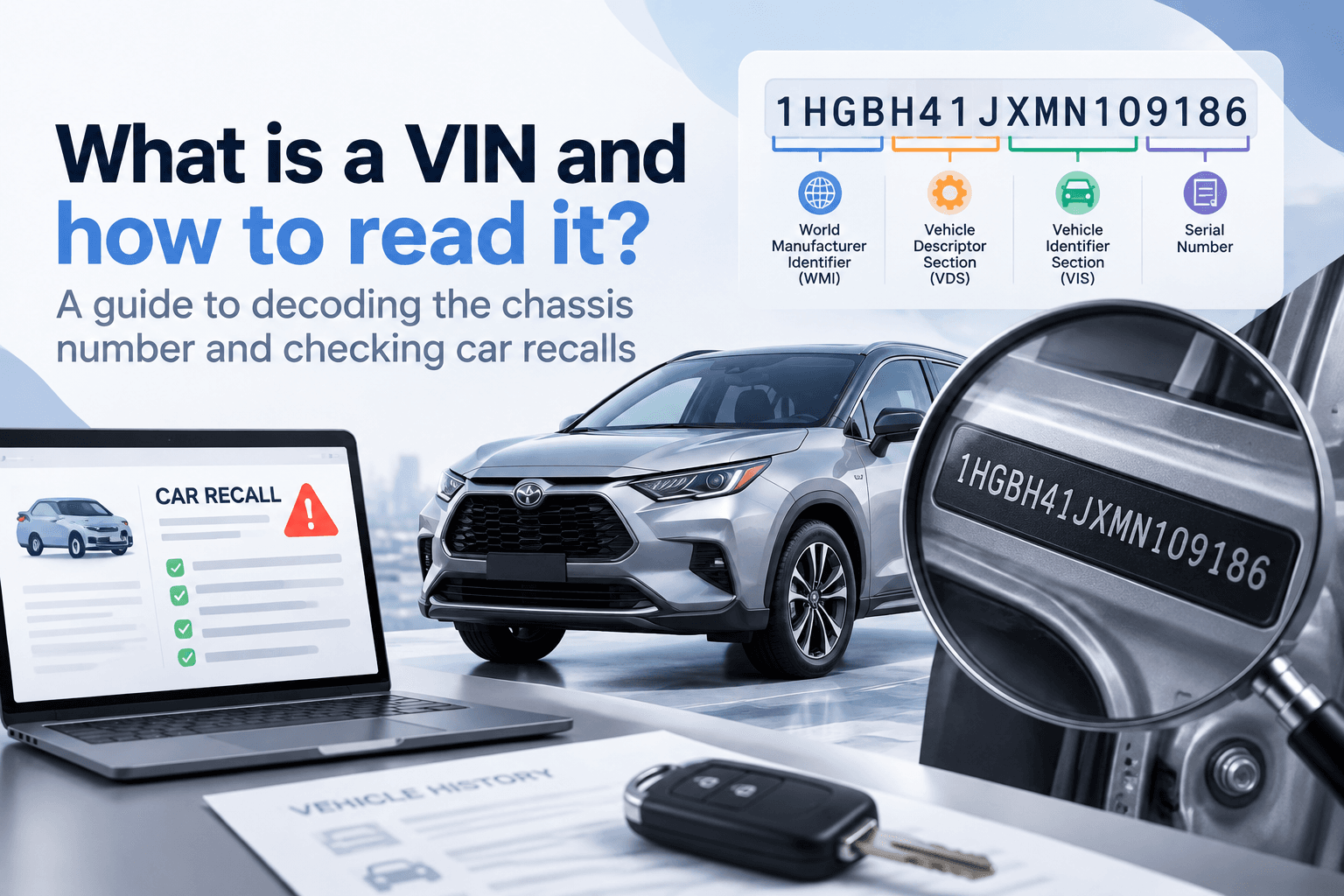
Each car has a unique identifier called the VIN (Vehicle Identification Number), which is like the license plate number of a car. Before buying a used car, checking the VIN is one of the most important things: you understand whether the model, year of manufacture, engine and manufacturer are what the seller says or not. With the tool at the top of the page, you can enter the VIN and see the vehicle specifications and safety recalls of that model in a few seconds.
🔎 Free VIN Decoder & Recall Checker
Decode any 17-character VIN and see NHTSA safety recalls for that model.
⚠️ Recall results are matched by the decoded make, model and model year. They show recalls issued for this vehicle line, not whether this exact car has an open, unrepaired recall. For a VIN-specific answer, use the official NHTSA recall lookup. Data: U.S. NHTSA (vPIC and Recalls APIs).
Where can I find the VIN?
- Driver’s side corner of the dashboard, visible from behind the windshield
- Label inside the driver’s door frame
- Car card, insurance policy or vehicle document
- What do the 17 characters mean?
🔎 Free VIN Decoder & Recall Checker
Decode any 17-character VIN and see NHTSA safety recalls for that model.
⚠️ Recall results are matched by the decoded make, model and model year. They show recalls issued for this vehicle line, not whether this exact car has an open, unrepaired recall. For a VIN-specific answer, use the official NHTSA recall lookup. Data: U.S. NHTSA (vPIC and Recalls APIs).
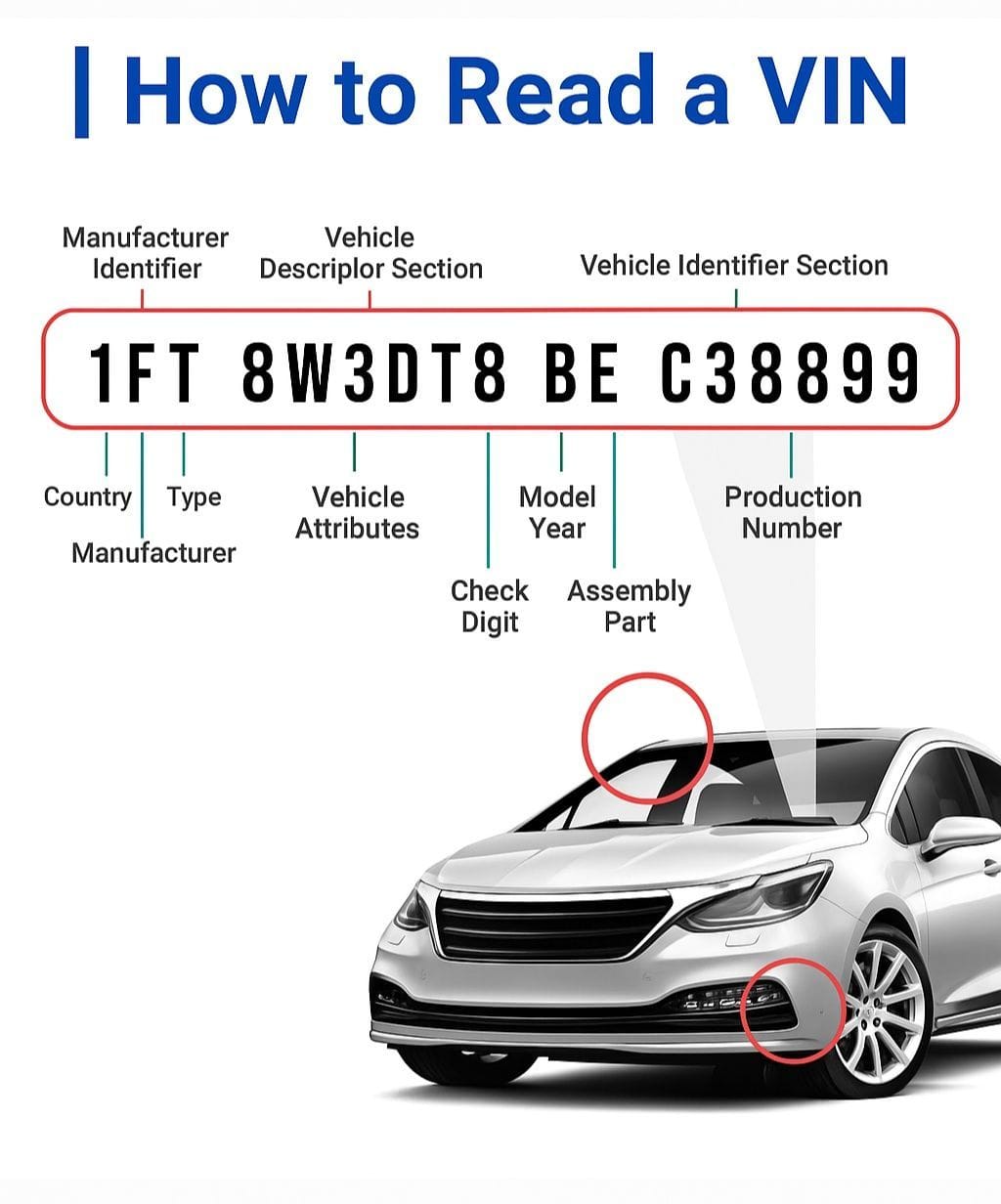
The VIN is made up of English numbers and letters, and the letters I, O and Q are never in it (because they are confused with 1 and 0). General structure:
- Characters 1 to 3 (WMI): Manufacturer and country of manufacture
- Characters 4 to 8 (VDS): Model, body type, engine and type of safety system
- Character 9: Check digit to detect fake or incorrect VIN
- Character 10: Model year
- Character 11: Assembly plant
- Characters 12 to 17: Production serial number
What information does the tool show?
The specifications are read from the official NHTSA (US Highway Traffic Safety Administration) database: year, make, model, body type, engine, fuel, drive system, transmission and place of manufacture. The tool is more accurate for cars built for the US market. For cars from other markets, the information may be incomplete.
What is a recall?
A recall means that the manufacturer and NHTSA have identified a safety defect in a specific model and year that should be fixed at the dealership free of charge. Examples: airbag, fuel pump, or brake failure.
One important note
The tool finds recalls by make, model, and year, not by exact VIN. So if you see a recall listed, it means that a recall has been issued for that model; it doesn’t necessarily mean that your car is open, and it may have already been repaired. For an accurate answer, enter the VIN into the official NHTSA tool and verify the result with the dealership.
What to do before buying a used car?
- Compare the VIN on the car with the VIN on the title and door sticker; they should be the same.
- Compare the decoded specifications with the ad (year, engine, transmission).
- Look for model recalls and ask the seller if they have been repaired.
- Request a vehicle history report (like Carfax or AutoCheck).
- Show the car to an independent mechanic before paying.
FAQs
How many characters does a VIN have?
17 characters, including letters and numbers, no I, O, or Q.
Is this tool free?
Yes, completely free and without registration.
Where does the information come from?
From the official NHTSA API (vPIC for VIN decoding and Recalls API for recalls).
Is the recall result for my car accurate?
The result is based on the make, model, and year, not the exact VIN. Use the official NHTSA tool for a more accurate check.
Why wasn’t my VIN recognized?
Recheck the VIN. Non-US or very old cars may not be in the complete database.
Does the tool show accident or ownership history?
No. You’ll need to use a car history service like Carfax for that.
The VIN is the key to truly identifying any car. Before you buy, take a minute to enter it into your tool to make sure the specs match the seller’s claims and you haven’t overlooked any safety recalls.