
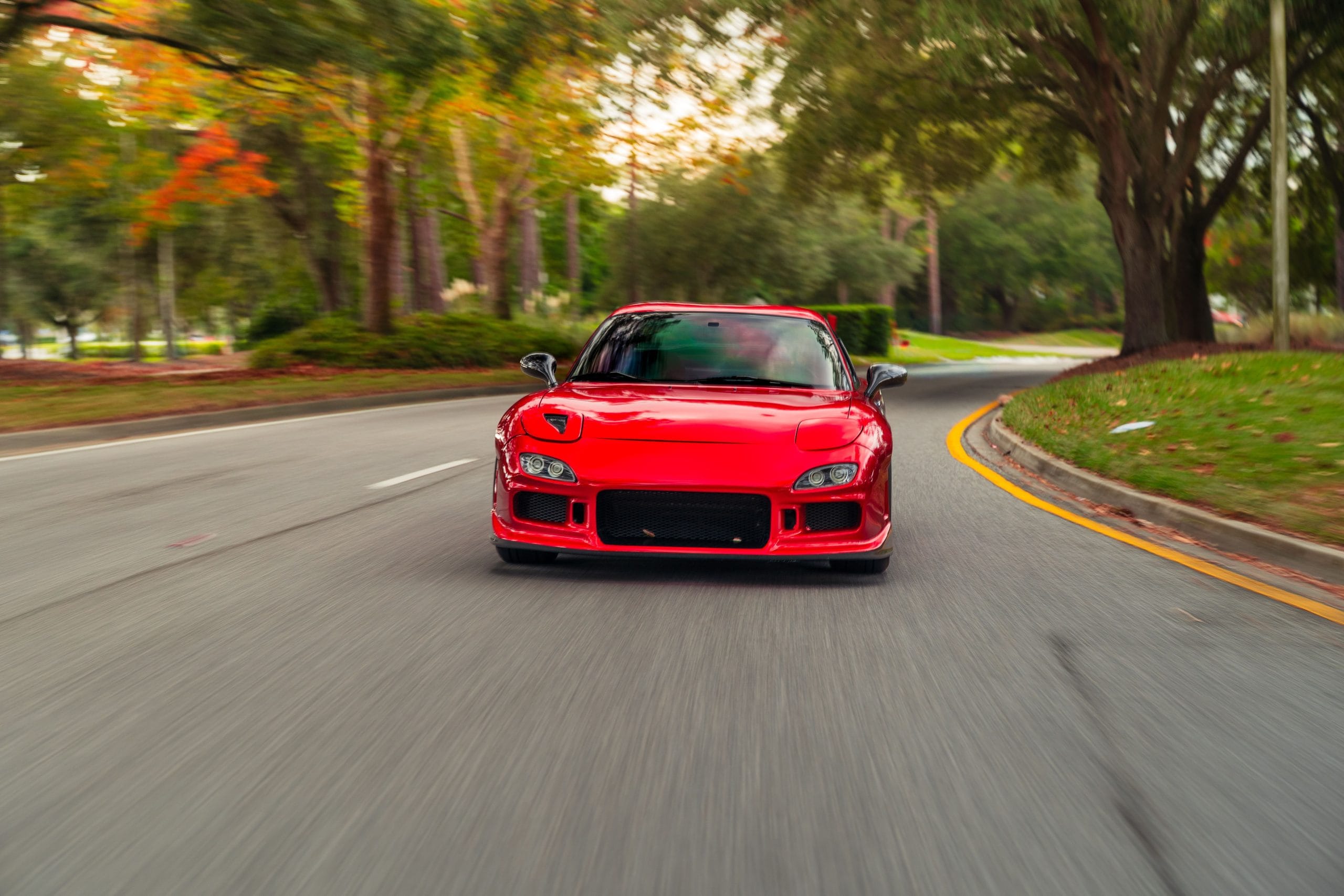

Mazda RX-7 rotary engine cars sound like nothing else on the road — a hard-edged, mechanical wail that climbs past 8,000 rpm without the shudder of pistons slamming up and down. It doesn’t sound like a car engine because, in a very real sense, it isn’t one. Underneath the hood of every RX-7 sits a Wankel rotary engine, a design so mechanically unconventional that nearly every manufacturer who touched it eventually walked away. Mazda didn’t walk away. Mazda bet the entire company on the rotary engine, nearly lost everything because of it, and then built one of the most beloved sports cars in history around it.
This article covers the full Mazda RX-7 rotary engine story — from a German engineer’s radical idea to 24 years of RX-7 production, and the racing legacy that made the rotary engine famous well beyond the RX-7 itself.
Table of Contents
1. The Man Who Invented the Mazda RX-7 Rotary Engine
Every Mazda RX-7 rotary engine traces its roots back to one German engineer named Felix Wankel, who began sketching a radically different kind of internal combustion engine in the 1920s. Instead of pistons moving up and down inside cylinders, Wankel imagined a triangular rotor spinning eccentrically inside an oval-shaped housing, creating the same intake-compression-combustion-exhaust cycle as a conventional engine but through pure rotational motion. He patented the concept in the 1930s, though it would take decades — and a partnership with the German manufacturer NSU — before a working prototype actually ran, in 1957.
It was a genuinely new kind of engine, the first fundamentally new internal combustion design since the 19th century. It was also, in its earliest form, nearly impossible to keep sealed.
2. Mazda’s Bet: Buying a License NSU Couldn’t Make Work
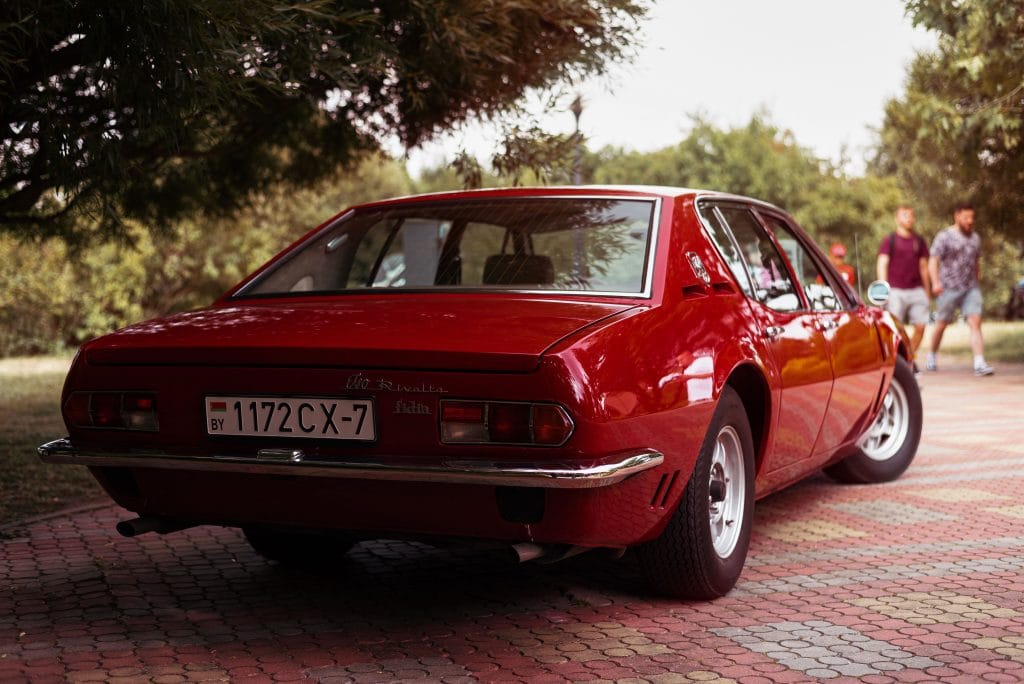
NSU pressed ahead anyway, releasing the world’s first rotary-powered production car, the NSU Spider, in 1964, followed by the more ambitious NSU Ro80 sedan in 1967. The Ro80 was a genuinely brilliant piece of design — aerodynamic, comfortable, and years ahead of its time — but its twin-rotor engine suffered catastrophic apex seal failures that left NSU replacing engines under warranty faster than it could build them. The financial damage was severe enough that NSU was absorbed into Volkswagen’s Audi division within a few years, effectively ending its independent existence.
Mazda, then still officially known as Toyo Kogyo, had signed its own licensing agreement with NSU and the American firm Curtiss-Wright back in 1961, betting that Japan’s smaller, less established automaker could succeed where NSU had struggled. Company president Tsuneji Matsuda pushed the project forward personally, convinced that a compact, high-revving engine with a fraction of the moving parts of a conventional powerplant represented the future of the automobile.
3. The “47 Ronin” and the Devil’s Fingernail Marks
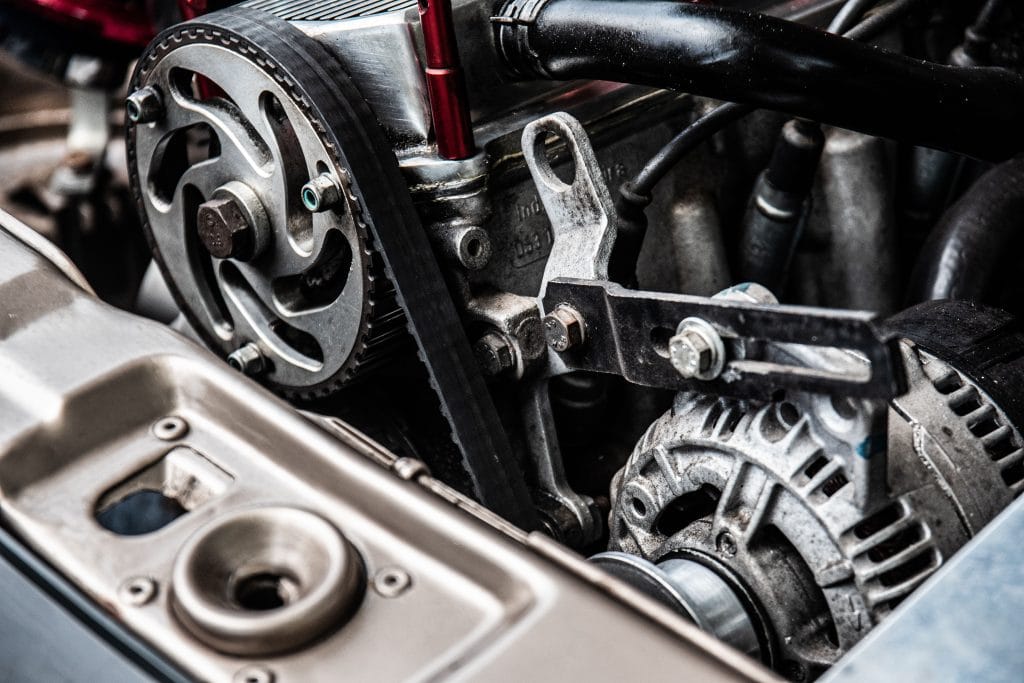
The core problem Mazda inherited from NSU was brutal in its simplicity: the apex seals at each corner of the rotor scored deep grooves — nicknamed “chatter marks,” or more evocatively, the “devil’s fingernail marks” — into the engine’s housing as they spun, eventually destroying the seal and the engine with it.
In 1963, Mazda formed a dedicated Rotary Engine Research Department under engineer Kenichi Yamamoto, staffing it with 47 engineers who became known internally as the “47 Ronin” — a reference to the legendary story of samurai loyalty and persistence. Their task was to solve chatter marks or abandon the rotary altogether. After years of metallurgical trial and error, the team developed a new apex seal material combining aluminum and carbon that could withstand the friction and heat without scoring the housing. It was this breakthrough, more than any single stroke of genius, that made the rotary engine commercially viable — and it’s the reason Yamamoto is remembered today as the father of Mazda’s rotary program, eventually rising to become the company’s president and later chairman.
4. The Cosmo 110S and the Rotary’s First Real Test
Mazda’s patience with the Wankel rotary engine paid off in 1967 with the launch of the Cosmo 110S, a low, futuristic two-seat coupe powered by a twin-rotor engine displacing under 1.0 liter yet producing output comparable to a much larger conventional engine. It was Mazda’s proof of concept — a demonstration that the rotary could be smooth, powerful, and durable enough for real customers. Rotary engines soon spread across Mazda’s lineup, appearing in sedans, a pickup truck, and even a public transit bus, as the company leaned harder into the technology than any manufacturer before or since.
5. The Oil Crisis That Almost Killed the Rotary Dream
Mazda’s rotary momentum collided head-on with reality in 1973. The 1973 oil crisis sent fuel prices soaring worldwide, and rotary engines — thirstier than comparable piston engines due to their combustion chamber shape and sealing losses — suddenly looked like a liability rather than an innovation. Sales of Mazda’s rotary-powered cars collapsed in export markets almost overnight, and the company found itself financially exposed at the worst possible moment. It was serious enough that Mazda’s independence came under real threat, and by the end of the decade the company had entered a capital partnership with Ford, which took a significant equity stake as part of a broader restructuring.
Rather than abandon the rotary — the technology that had nearly sunk the company — Mazda doubled down, refining the engine’s efficiency and looking for a platform that could showcase what the Wankel engine did best: revving effortlessly, weighing less than an equivalent piston engine, and delivering power with a smoothness no four-cylinder could match. That platform arrived in 1978.

6. 1978: The Mazda RX-7 Rotary Engine Is Born (SA22C/FB)
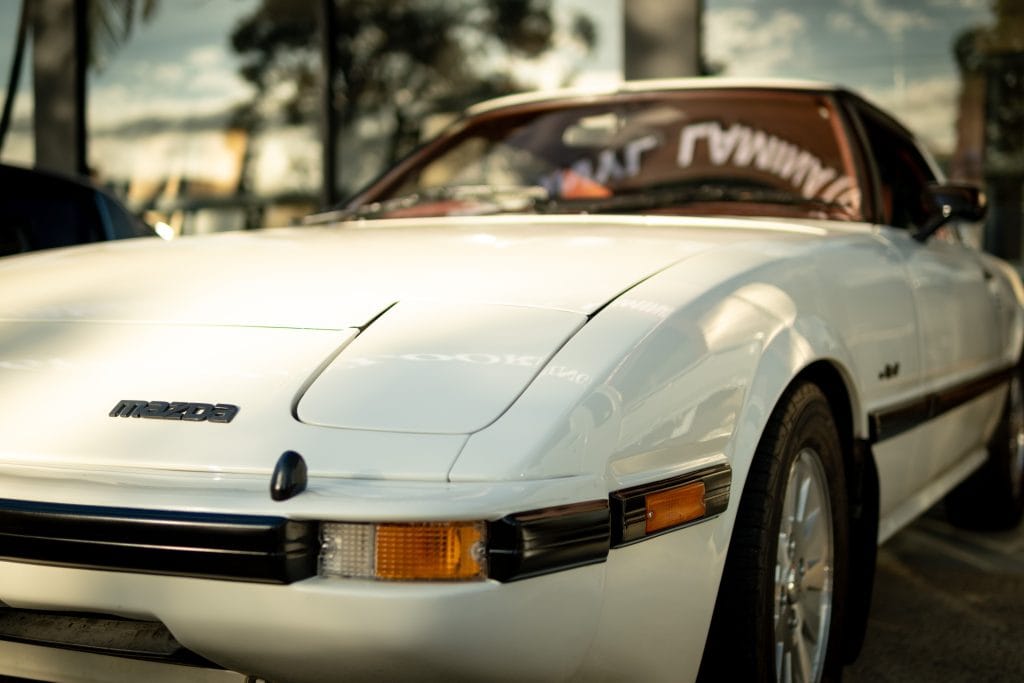
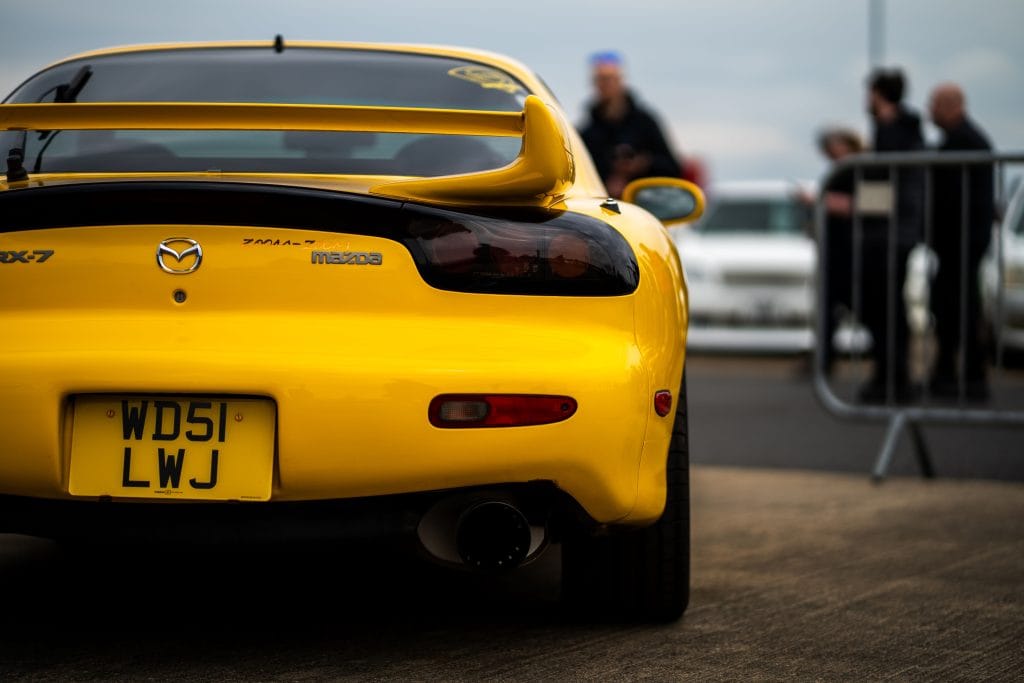
The first-generation Mazda RX-7, internally coded SA22C and later FB, launched as a two-seat hatchback coupe positioned as an affordable, rear-wheel-drive sports car — a direct rival to cars like the Datsun 280Z, but built around a completely different mechanical philosophy. Its 12A twin-rotor engine displaced just 1,146cc yet, thanks to the rotary’s low weight and compact size, could be mounted low and far back in the engine bay, giving the car near-perfect 50/50 weight distribution and razor-sharp handling that belied its modest horsepower figures.
The first generation evolved steadily rather than dramatically. The Series 2 cars, sold from 1981 to 1983, switched to lighter plastic bumpers, added four-wheel disc brakes, and introduced an optional limited-slip differential on higher trims. The Series 3, from 1984 to 1985, brought a rear spoiler, larger wheels, and upgraded brakes. Later in the run, Mazda also offered a fuel-injected 13B rotary alongside the original carbureted 12A, foreshadowing where the platform was headed next.
7. The FC Generation: Turbocharging and Four-Wheel Steering
Production of the second-generation RX-7, codenamed FC, ran from 1985 to 1991 and represented a far more ambitious car than its predecessor. Gone was the rotary’s role as an economy-car curiosity — the FC was engineered as a genuine sports car competitor, riding on a stiffer platform with a longer wheelbase and a curb weight of roughly 2,800 pounds.
Power came from the larger 1,308cc 13B rotary, offered in naturally aspirated form or, in the Turbo II models, with a single turbocharger and intercooler that meaningfully boosted output and torque. Mazda also fitted the FC with HICAS, a computer-controlled four-wheel steering system that subtly turned the rear wheels to sharpen turn-in and improve high-speed stability — a genuinely advanced feature for a mid-1980s sports car. A convertible body style joined the lineup in 1988, and more than 270,000 FC-generation RX-7s were built worldwide before production ended.
8. The FD3S: The Mazda RX-7 Rotary Engine at Its Peak
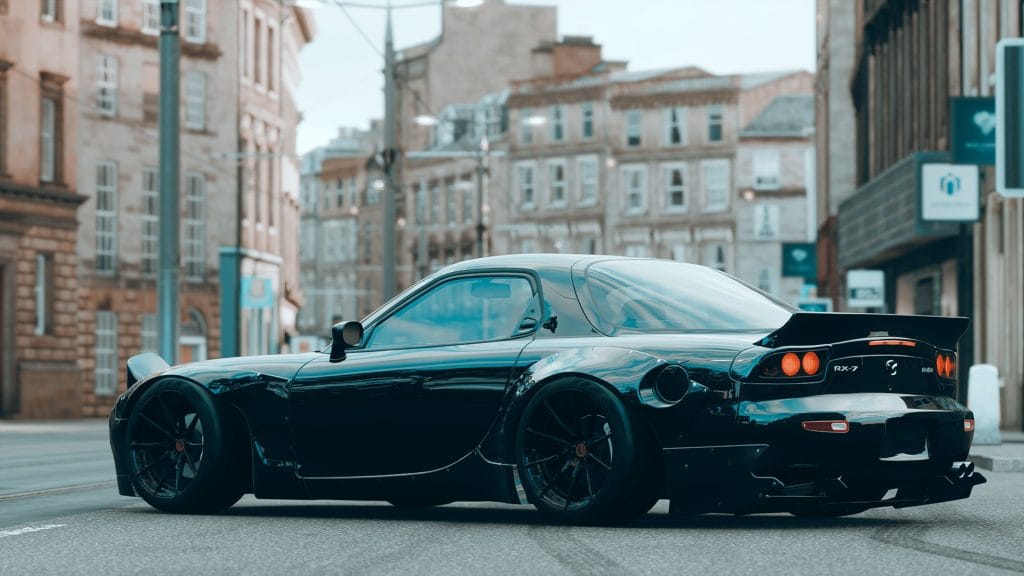
If the FC proved Mazda could build a credible sports car around the rotary engine, the third-generation RX-7 FD3S, produced from 1991 to 2002, proved it could build one of the best sports cars of its era, full stop. The FD abandoned the pop-up headlights and boxier proportions of its predecessors for a sculpted, curvaceous body with flush headlights and a drag coefficient of just 0.31 — genuinely impressive aerodynamics for a car of its period.
Under the hood sat the 13B-REW, a twin-turbocharged evolution of the same rotary architecture, but with a sequential turbo setup inspired by systems used in cars like the Porsche 959: a small primary turbocharger spooled quickly for low-rpm response, handing off to a larger secondary turbo at higher revs to minimize the lag that plagued many turbocharged cars of the time. In Japanese-market trim, the engine produced 255 PS at launch, with later revisions — including Mazdaspeed-tuned A-Spec models — pushing output past 260 horsepower. A limited-run Australian homologation special called the SP, of which only 35 were built, used lightweight aluminum and carbon-fiber panels and an uprated turbo system to reach 273 horsepower.
The FD’s curb weight held at roughly 2,800 pounds despite its added technology, and the car earned a reputation among enthusiasts and automotive journalists as one of the most balanced, communicative sports cars ever built — a reputation that has only grown since production ended.
9. The 787B: A Banned Engine’s Greatest Victory
While the road-going RX-7 built the rotary’s reputation with enthusiasts, Mazda’s motorsport program built its legend on the world stage. Mazda had campaigned rotary-powered prototypes at the 24 Hours of Le Mans since the early 1970s, with a dedicated factory effort ramping up through the 1980s. That effort culminated on June 23, 1991, when the Mazda 787B — powered by a four-rotor R26B engine that screamed to over 9,000 rpm with a sound unlike anything else on the grid — crossed the finish line first, making Mazda the first, and to date only, manufacturer to win Le Mans outright with a rotary engine, and the first Japanese manufacturer to win the race overall.
The timing added to the legend: regulations phasing out unconventional engines from the top class of endurance racing, part of a broader shift toward standardized 3.5-liter piston engines, had already been announced before the race and would take effect the following season. The 787B’s rotary was, in effect, racing on borrowed time — grandfathered into its final eligible season under existing rules rather than banned specifically because of Mazda’s win, as is sometimes claimed. Either way, it remains the last rotary-powered car ever to compete at Le Mans, making its victory as much a send-off as a triumph.
10. Why the RX-7 Disappeared — and What Replaced It
Despite the FD’s engineering brilliance, the RX-7 could not outrun tightening emissions and fuel economy regulations forever. The rotary’s inherent design — burning a small, deliberate amount of oil to lubricate its apex seals, and producing higher hydrocarbon emissions than an equivalent piston engine — made it increasingly difficult and expensive to certify for key export markets through the late 1990s. Combined with slowing global sales, Mazda ended FD3S production in 2002, closing the book on the RX-7 nameplate after 24 years and more than 800,000 units built across all three generations.
Mazda didn’t abandon the rotary itself. The RX-7 was succeeded in 2003 by the RX-8, which used a revised rotary engine called RENESIS and an unusual four-door layout with rear-hinged “freestyle” doors and no center pillar. The RX-8 sold respectably but never matched the RX-7’s cult following, and Mazda has not offered a dedicated rotary sports car since the RX-8 ended production in 2012 — though the company has continued rotary research, most notably as a compact range-extender generator for hybrid and electric concept vehicles.
11. Living With a Rotary: The Honest Reliability Picture
Part of what makes the Mazda RX-7 rotary engine story compelling is that the rotary’s core trade-offs never fully disappeared, even after decades of refinement. Apex seals remain a wear item, and their lifespan depends heavily on how the car is driven and warmed up — short trips and cold starts are particularly hard on a rotary, since the engine needs sustained heat to burn fuel cleanly and keep its seals properly lubricated. Owners who neglect warm-up routines or skip regular oil top-ups risk flooding the engine or accelerating seal wear, while well-maintained examples, driven with the rotary’s quirks in mind, can rack up significant mileage without major issues.
Carbon buildup, cooling system failures, and, on turbocharged FD models, turbocharger wear are the other most commonly cited issues among long-term owners. None of these are unique to Mazda’s engineering — they’re simply the ongoing cost of choosing a fundamentally different combustion architecture over a conventional piston engine, and they’re exactly why specialist knowledge and rotary-experienced mechanics remain valuable for anyone taking on an RX-7 today.
12. The RX-7 Today: A Gamble That Paid Off Decades Later
The RX-7’s market has transformed dramatically in the past decade. FD3S values in particular have climbed sharply as the model became eligible for US import under the 25-year rule and as appreciation for JDM performance cars grew globally, with clean, unmodified examples now regularly commanding tens of thousands of dollars — a figure that would have seemed absurd when these cars were simply used sports cars a generation ago. Earlier SA22C and FC-generation cars remain considerably more accessible, though prices have been rising there too as buyers rediscover the earlier chapters of the RX-7 story.
What’s remarkable, looking back, is how close this story came to never happening at all. NSU’s failure with the Ro80 should have killed the rotary engine’s commercial prospects entirely. The 1973 oil crisis should have finished the job. Instead, a small group of engineers in Hiroshima, and a company willing to keep betting on an engine most of the industry had already given up on, turned a mechanical curiosity into one of the most distinctive and respected sports cars ever built. The RX-7 wasn’t just powered by a gamble — for 24 years, it was the gamble, proven right one generation at a time.
Frequently Asked Questions
Why did Mazda stick with the rotary engine when every other manufacturer gave up on it?
Mazda’s reputation and early investment were tied to the rotary, so instead of abandoning it after the 1973 oil crisis exposed its fuel-economy weaknesses, the company kept refining it — eventually turning that stubbornness into the RX-7’s defining identity.
What’s actually different about how a rotary engine works compared to a normal engine?
A normal engine converts pistons moving up and down into rotation via a crankshaft. A rotary engine skips that step — a triangular rotor spins directly inside an oval housing, making it smaller, lighter, and capable of much higher rpm.
Is the Mazda RX-7 the same car as the Mazda RX-8?
No. The RX-7 ran from 1978 to 2002 across three generations. The RX-8, introduced in 2003, replaced it with a four-seat layout, rear-hinged doors, and a revised rotary engine called RENESIS.
Which RX-7 generation is considered the most desirable today?
The FD3S (1991–2002) is generally seen as the most refined, thanks to its twin-turbo engine and sharper handling, and it commands the highest resale prices. Earlier SA22C and FC-generation cars still have a loyal following for their simplicity and lower running costs.
Did Mazda’s Le Mans win actually get the rotary engine banned from racing?
Not quite. The rules eliminating rotary engines from top-level endurance racing were announced before the 1991 race as part of a broader regulatory shift, and took effect the next season regardless of the result — the timing just created a persistent myth.
Final Thoughts
The Mazda RX-7 only exists because a handful of engineers in Hiroshima refused to accept that the Wankel rotary engine was a dead end, even after its inventor’s own partners had all but proven it was. That stubbornness turned a nearly company-ending gamble into three generations of one of the most distinctive sports cars ever built, and into a Le Mans victory that no other manufacturer has matched before or since with the same technology.
The Mazda RX-7 rotary engine story isn’t really about horsepower figures or turbo configurations, even though both matter to the people who love these cars. It’s about a company willing to keep betting on an unconventional idea long after the smarter, safer move would have been to quit. Whether you’re drawn to the RX-7 for its handling, its sound, or simply the sheer improbability of its engineering, it remains one of the clearest examples in automotive history of a gamble that eventually paid off.
Curious how the RX-7’s rotary heritage compares to more conventional performance platforms? Check out our other guides in Classic Cars for more deep dives into the engineering stories behind the cars enthusiasts still argue about decades later. And if you’re weighing a modern sports car purchase against something with real mechanical character, our Car Buying Guide section has you covered.